


Industrial lighting refers to lighting fixtures and designs commonly used in industrial settings. These settings require robust, durable lighting solutions that can withstand harsh environmental conditions. Industrial lighting is often used to enhance the work environment, promote productivity, and improve worker safety. If you want to know the specifications and prices of Industrial Lighting, please contact us!
Why Choose Us
As a specialist in modern, efficient ,advanced LED lighting for industry applications,DUALRAYS LIGHTING Co.,LTD. is one of the leading professional technology and marketing oriented NHTE (National High Technology Enterprise) in R&D,manufacturing,sales and service of intelligent, healthy and efficient industrial LED luminaires.
Professional Team
We have strong R&D team which work closely to Marketing and Sales Department,and strict quality control system and facilities to ensure the quality.
Advanced Equipment
More than 600.000 USD has been invested for advanced facilities, including SMT machine, reflow soldering machine, optoelectronics test machine, ageing test machine ects
Rich Experience
More than 8 skilled engineers with average 8 years experience work , from various fields, such as optics desgn, electronics, mechanical, thermal ects, cooperating with brand components.
One-Stop Solution
Our solutions are designed using lighting software and bespoke technology that ensure we deliver the greatest savings, the correct light levels that in turn will deliver the maximum returns to your project.
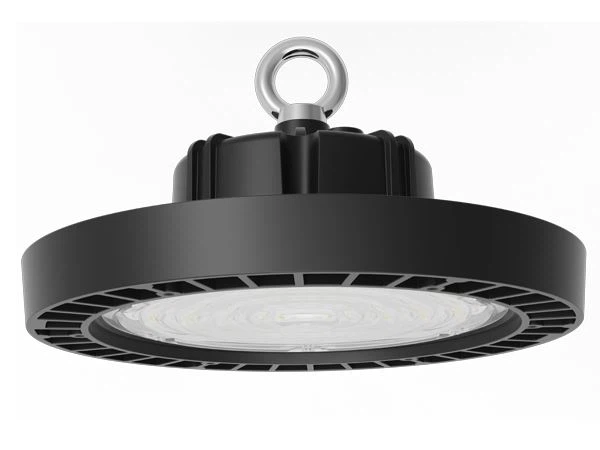
HB2.5 High Performance Cost UFO LED High Bay
Efficiency: BASELine: PROLine: 140LPW PRIMELine: 160LPW

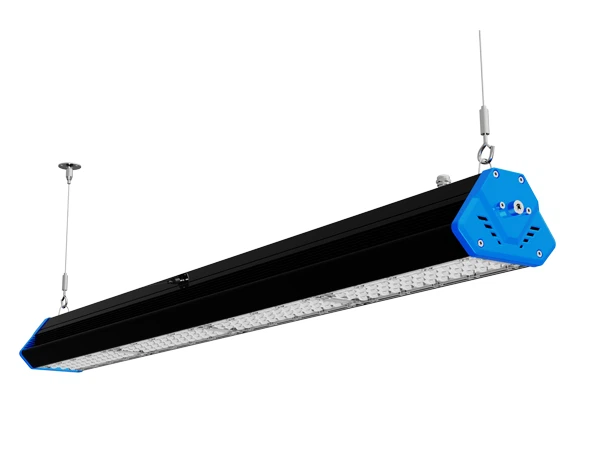
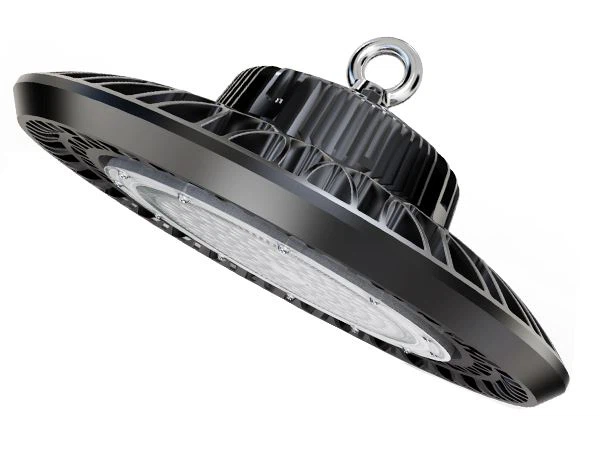
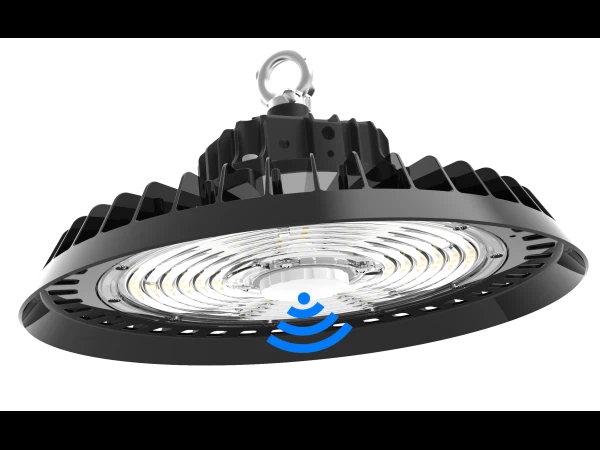
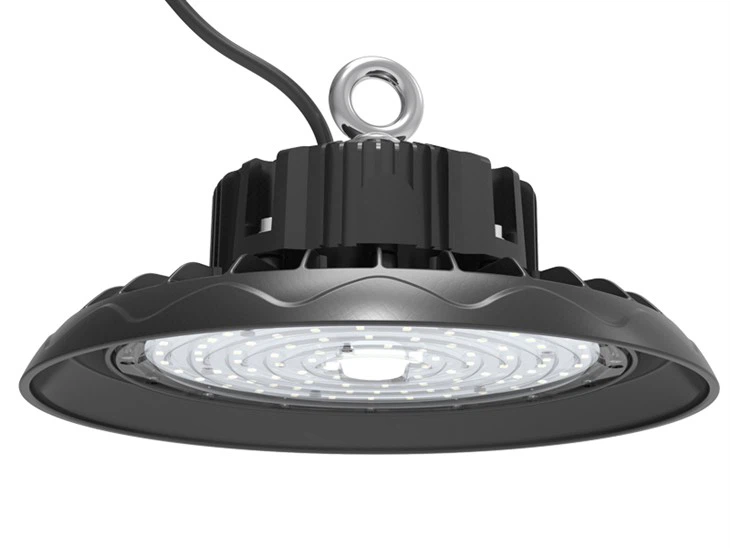
Advantages of Industrial Lighting
Improved Energy Efficiency
LED lights are renowned for their superior energy efficiency. Unlike incandescent lightbulbs, they require significantly less power to produce the same amount of light. For instance, an incandescent lightbulb that produces 800 lumens of light may require 60 watts of electrical energy.
However, an LED lamp with the same brightness and intensity will only require approximately 10% of the wattage. An LED light only takes about 6 watts to produce the same results as an incandescent lightbulb.
Low Maintenance
LED lights also require little to no maintenance, a huge advantage for business owners dealing with more important matters. Rather than spending time ensuring their light fittings are in excellent working conditions, they can focus on day-to-day business.
Switching to LEDs not only saves you the hassle of frequent replacements but also offers significant financial benefits. With an average lifespan of 20,000 to 50,000 hours, and some models lasting up to 100,000 hours, you'll be making a long-term investment that will pay off in reduced replacement costs. This is the third compelling reason to consider LED industrial lighting.
Greater ROI
Whether running a small manufacturing business or a gigantic industrial warehouse, installing LED lights will contribute to a better return on your investment. Because of their reduced energy requirements and extended lifespan, LEDs can drastically reduce your electricity bills, allowing you to make significant savings over a more extended period.
Some may argue that LEDs are initially more expensive than traditional lighting fixtures. While there may be some truth in this, when you consider the lower utility bills and the fact that you will need fewer replacements, LED lights are the more cost-effective option. With the rapid advancements in lighting technology, LEDs have become much more economical, ushering in a new era of cost-effective, energy-efficient lighting.
Enhanced Workplace Safety
Workplace safety is a vital consideration for every business owner. Failure to protect employees' safety can have severe consequences, including business closure. Fortunately, LED lights provide better illumination for factories, warehouses, and showrooms, among other facilities, helping ensure a much safer workplace.
By enhancing the illumination in poorly lit areas, accidents can be avoided. Furthermore, LEDs can also help reduce eye fatigue among employees and help them stay alert.
No Harmful Substances
Unlike traditional lighting solutions, LEDs do not contain harmful chemicals or substances. For instance, LED lighting is free from mercury, a common component of fluorescent lights. In addition, unlike incandescent lightbulbs, LEDs don't contain tungsten or certain types of halogen gas.
As LEDs are free from toxic chemicals, they are relatively easy to dispose of in the appropriate manner. Moreover, there is little to no risk of exposure to harmful substances if they accidentally break.
Suitable in Both Hot and Cold Temperatures
Another advantage of LEDs is that they work well in any environment. Because they don't generate excessive heat, there is no need to worry about ventilation if you install them in a confined area that requires several lighting fixtures. Similarly, LEDs work well in very low temperatures. Fitting them in a cold environment can help extend their lifespan.
High-Quality Illumination
Glare-producing lights are unsuitable for industrial applications because they can cause severe eye strain. LED lights, on the other hand, are ideal because they produce high-quality illumination without excessive direct brightness or glare. LEDs can also be easily dimmed to achieve the appropriate light intensity.
Types of Industrial Lighting


Floodlight Fixtures
The type of industrial lighting fixture essential for all industrial units is floodlight fixtures. Floodlights, as per their name, flood an area with light. By using LED lights, the intensity of the floodlight fixtures increases. These are typically used in areas such as industrial or manufacturing buildings and parking lots. These lights are the types of industrial lighting fixtures that can be manufactured in plenty of shapes and sizes. They are the critical fixtures used in any industrial lighting for landscape lighting, security, and as well as with motion sensors.
Linear Strip Light Fixtures
To attain a professional look in the industrial space, linear strip light is the precise type of industrial lighting fixture to serve the required purpose. These smaller fixtures provide a sophisticated and smooth look while illuminating a place. For areas in the industrial building where subtle light is required, LED linear strip lights are used to create a sense of security and ambiance.
Task Light Fixtures
Task lighting is the most common type of fixture used among industrial and commercial facilities. These lighting fixtures are not manufactured to illuminate wide, large spaces. The purpose of this light fixture is to provide high-functioning light for a particular task. The working areas in the industrial spaces where the workers require lighting to focus on their jobs, these lights are used to provide a concentrated area to get the work done. These industrial lighting fixtures are portable, adjustable, and provide the required amount of light in the desired places to help the workers increase their productivity and quality of work.
Recessed Light Fixtures
The recessed troffer lighting fixtures consist of LED bulbs or linear tubes replacing the fluorescent bulbs. This type of industrial lighting fixture may be wall-mounted, surface-mounted, or hung with chains in industrial working spaces and buildings. The installation price might be high, but it serves the amount spent by lasting longer than many other types of industrial lighting fixtures. You can also replace the existing fluorescent light with a retrofit that is significantly easier to install but might not last too long.
High Bay Light Fixtures
High bay lighting fixtures are applicated to industrial spaces whose height is more than 20 feet from the floor or ground. This type of industrial lighting fixture illuminates a vast, ample room with a high lumen volume to ensure high illumination. Placing these fixtures above the ground fulfills its purpose of pervading the place. These lights are ideal for illuminating horizontal as well as vertical working areas.
Low Bay Light Fixtures
If you have an industrial space not ample enough in terms of height and width, this type of industrial lighting fixture is your ultimate option. The commercial and industrial sectors whose a ceiling height is less than 20 feet. In contradistinction to high bay lighting fixtures, these industrial lighting fixtures have a small number of lumens as they do not have to illuminate large, expansive spaces. LED lights are used widely in low-bay lighting fixtures due to their durability, increased demand, cost efficiency, and energy efficiency. These fixtures are also ideal for buildings or warehouses with low ceilings to ensure proper light distribution around the space.
Area Lights Fixtures
This type of industrial lighting fixture is used to illuminate the pathways and parking lots of factories or industrial warehouses. A sense of safety is established around the area due to high illumination to suspect any unwanted movement. These light fixtures give a feeling of relaxation while providing enough light to keep criminals out of the scene. These lighting fixtures can also be mounted on poles heightened between 10 feet to 100 feet to illuminate large spaces with open surroundings. The fixtures are used to light up the dark hallways of the industrial warehouses as well as the work area.
Street Lights
LED streetlights are used widely in parking lots of industrial warehouses. These types of industrial lighting fixtures are also used for pathway lighting, storage areas, and security lighting purposes. They illuminate the outdoor areas of industrial spaces well enough. There is a scarce chance of these light fixtures going bad as they are manufactured to withstand low or unstable voltage and high voltage in power supply. It can also withstand harsh weather conditions while functioning to its total capacity.
Wall Packs
Wall packs work great for security purposes. This type of industrial lighting fixture is used in outdoor spaces as its intensity can be controlled. The design is minimal as well as the light output is ideal. The durability of this type of industrial lighting fixture is remarkable due to the die-cast aluminum, and they also withstand harsh weather conditions. Due to all its benefits, these lighting fixtures work great for areas with challenging environments.
Applications of Industrial Lighting
Manufacturing Facilities
Bright, even lighting is critical for precision tasks, safety, and quality control. Industrial lights help workers see clearly across large work areas, reducing the risk of errors or accidents.
Warehouses and Storage Facilities
Effective lighting is essential for navigating aisles, loading docks, and inventory areas. It ensures that workers can efficiently manage stock and operate forklifts or other machinery safely.
Outdoor Yards and Construction Sites
These areas often operate at night or in low-light conditions, and industrial floodlights provide powerful illumination to cover large, open spaces for security and functionality.
Hazardous Areas
Explosion-proof lighting is designed for environments that involve flammable gases, chemicals, or dust, providing safe illumination without sparking combustion.
Wastewater & Water Treatment plants
Wastewater treatment plants operate in demanding environments where lighting plays a critical role in ensuring safety, efficiency, and compliance with regulatory standards.These solutions provide glare-free illumination for various treatment processes, enhance visibility in confined spaces, and ensure security in outdoor areas.
Infrastructure
Our solutions deliver even illumination that enhances safety, security, and visibility, even in harsh or corrosive environments. We also offer hazardous location LED lighting options for these areas.
Warehouses & Manufacturing Facilities
Warehouses and manufacturing facilities require well-designed lighting systems that promote safety, quality control, and worker productivity. From warehouse LED lights and warehouse high bay LED lights for production areas, storage, and conveyors, to industrial wall pack lights for perimeter security. Our solutions also contribute to lower energy consumption and reduced lighting maintenance time.
Task & Maintenance Lighting
LED lights suitable for task and maintenance areas, providing optimal light for worker productivity and safety in industrial applications. These impact-resistant lights offer protection in challenging environments where collisions are a possibility. Our task and maintenance light fixtures are ideal for service, maintenance, repair, inspection, and cleaning operations in both indoor and outdoor settings, including wet or hazardous locations.
How to Choose Industrial Lighting
Cost & Durability of Industrial Lighting
When looking at lighting options, it's super important to consider both upfront costs and long-term savings. While some lighting choices may seem cheaper initially, they might need frequent replacements and end up costing you more on maintenance over time. Instead, opting for higher-quality and more energy-efficient lighting, like LED fixtures, may have a high initial cost, but can lead to significant savings in energy bills and maintenance expenses in the long run. Conduct a cost-benefit analysis to determine the most reasonable option for your budget and operational needs.
Color Temperature and Ambiance
The color temperature of light significantly impacts the ambiance and over-all function of a commercial space. Different lighting cast varying hues, ranging from warm yellows to cool whites. Consider what activities and jobs are being performed in each area of your commercial property when choosing the color temperature. For instance, areas requiring focus and concentration, such as workstations and production floors, may benefit from cooler tones that promote alertness. On the other hand, warmer tones can create a more inviting atmosphere in break rooms or areas where customers will be.
Noise Levels
Some traditional lighting sources, like fluorescent bulbs, can emit audible buzzing or humming noises, which may cause distractions and discomfort for employees. Modern LED lighting solutions are known for their silent operation, making them a preferred choice in environments where noise reduction is important. Prioritize lighting fixtures that offer quiet performance to increase overall comfort and productivity in your workspace.
Heat Emission
Another crucial factor to consider is the heat generated by lighting fixtures, especially in confined or small spaces. Certain lights, such as incandescent bulbs, can produce quite a bit of heat, which can potentially lead to discomfort or increased cooling costs, especially during the warmer months. LED lights, in contrast, emit minimal heat, making them suitable for maintaining comfortable temperatures and reducing HVAC load in enclosed areas like offices, warehouses, or manufacturing facilities.
Industrial Lighting's Impact on the Environment
As businesses increasingly focus on sustainability and the environment, choosing eco-friendly lighting options has become popular. Energy-efficient lighting not only reduces carbon footprint but also means lower energy consumption and operational costs.
Partners

Our Factory

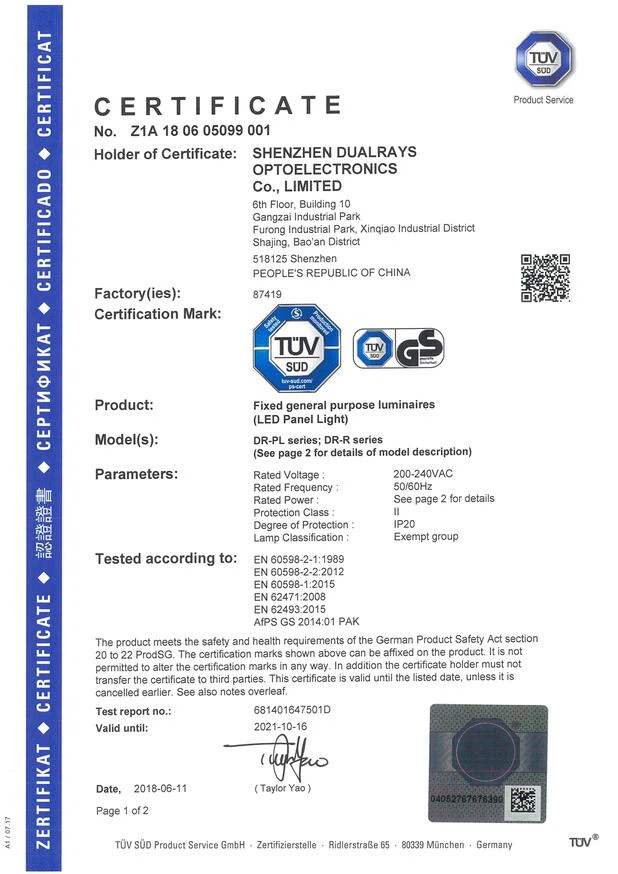
Certificate

Frequently Asked Questions
Q: Can industrial lighting reduce worker fatigue?
A: Yes, proper lighting can reduce eye strain and improve concentration, reducing fatigue. Lights with high CRI (Color Rendering Index) and appropriate color temperature help create a visually comfortable and productive work environment.
Q: Why is industrial lighting important?
A: Industrial lighting ensures a safe, productive, and comfortable work environment by reducing the risk of accidents, improving visibility, and supporting workers' concentration. Effective lighting can also reduce energy costs and enhance operational efficiency.
Q: What are the different types of industrial lighting?
A: Common types include high bay and low bay lights, floodlights, linear lights, task lighting, and area lighting. These can be LED-based, metal halide, fluorescent, or high-pressure sodium, depending on the needs of the facility.
Q: Why are LEDs often recommended for industrial lighting?
A: LEDs are highly efficient, long-lasting, and have lower maintenance requirements compared to traditional lighting. They provide instant brightness, are less prone to flickering, and can withstand extreme temperatures, making them ideal for industrial settings.
Q: What is high bay lighting?
A: High bay lighting is a type of lighting designed for spaces with high ceilings (typically over 15 feet). It provides bright, even illumination across large areas, making it suitable for warehouses, manufacturing plants, and sports arenas.
Q: What is the difference between high bay and low bay lighting?
A: High bay lighting is for ceiling heights above 15 feet, using more powerful lights to cover large spaces, while low bay lighting is for ceilings 12 to 20 feet high and provides effective lighting for smaller, open areas with lower mounting heights.
Q: How do I determine the right lumen output for my industrial lighting?
A: The required lumen output depends on the area's size, ceiling height, and lighting needs. For example, manufacturing facilities may require 300-500 lux, while storage areas may only need 100-200 lux. Consulting a lighting specialist can help determine specific lumen needs.
Q: Are industrial lights weatherproof?
A: Many industrial lights come with high IP (Ingress Protection) ratings, such as IP65 or IP66, to withstand dust, water, and other harsh conditions. This makes them suitable for both indoor and outdoor applications.
Q: What is the ideal color temperature for industrial lighting?
A: The ideal color temperature depends on the work environment. Neutral white (4000K-4500K) is common in factories, while cool white (5000K-6500K) is used in areas requiring higher visibility and focus, like inspection areas or assembly lines.
Q: What are the energy savings with industrial LED lighting?
A: LEDs consume up to 75% less energy than traditional lighting and can dramatically reduce energy costs over time, especially in large facilities where lights are used for extended hours.
Q: Are there regulations or standards for industrial lighting?
A: Yes, most countries have occupational health and safety standards for industrial lighting, such as OSHA in the United States, which mandates minimum lighting levels in different industrial spaces to ensure worker safety and productivity.
Q: Do industrial lights need to be dimmable?
A: Dimming capability can benefit industrial settings by allowing adjustment based on daylight availability or activity levels, further saving energy. Some industrial LED fixtures offer dimmable options that can be integrated with smart lighting controls.
Q: What maintenance do industrial lights require?
A: LED industrial lights are low-maintenance but may require periodic cleaning to remove dust or debris from fixtures. Older lights, such as metal halides, may need frequent bulb replacements due to shorter lifespans.
Q: Can industrial lights be used with motion sensors or automated controls?
A: Yes, many industrial lights can be integrated with motion sensors, daylight sensors, or smart lighting systems, allowing lights to turn on or dim based on occupancy or ambient light, enhancing energy efficiency.
Q: What is the average lifespan of industrial LED lights?
A: Industrial LED lights have an average lifespan of 50,000 to 100,000 hours, which greatly exceeds the lifespan of traditional lighting options like metal halide or fluorescent lights, leading to lower maintenance costs.
Q: How do I choose the right beam angle for industrial lighting?
A: Beam angle depends on ceiling height and coverage needs. Narrower angles (e.g., 60°) are better for high ceilings and focused lighting, while wider angles (e.g., 120°) are suitable for lower ceilings and broader area coverage.
Q: Are industrial lights resistant to vibration and shock?
A: Yes, many industrial lights, particularly LEDs, are designed to withstand vibrations and shocks commonly found in industrial environments, such as in manufacturing or assembly plants, providing reliable performance over time.


Options:
> Driver: Meanwell HBG(Round),ELG/HLG(Retangle),Sosen;
> Controls and Dimming: 1-10V, DALI, Motion sensor,Daylight sensor,Zigbee and Emergency;
> Reflector : PC reflector / Al reflector;
> Lens : 60°/90° (with Pearl or Stripe Lens)/120° (PC or Toughened Glass Cover)
> Installation: Loop Hanging, Ceiling Mounting, Wall Mounting;

> Factories / Warehouses / Supermarket
> Exhibitions / Showrooms / Animal Farm
> Barns and Riding Halls / Logistic Center
> High Rooms and Halls / Stadium / Chemical Plant
> Traditional lamp replacement

| Model No. | DR-HB100-DGXP | DR-HB150-DGXP | DR-HB200-DGXP | DR-HB240-DGXP |
| System Watts/W | 100W | 150W | 200W | 240W |
| System Efficiency/LPW | 140LPW / 160LPW Optional | |||
| Lumen Output/lm | 14.000 / 16.000±5% | 21.000 / 24.000±5% | 28.000 / 32.000±5% | 33.600 / 38.400±5% |
| Rated Input Voltage/V | AC100~277V, 50/60Hz | |||
| LEDs Light Source | SMD2835 (1W) | |||
| SDCM | <5 | |||
| CCT/K | 5000K for Standard (3000K/4000K/5700K/6500K Optional) | |||
| CRI/Ra | >70Ra (>80Ra for Option) | |||
| Power Factor | >0.95 | |||
| THD | <10% | |||
| Beam Angle(Optional) | 60°/90°/120° Optional | |||
| UGR | <25 | |||
| Surge Protection | 3.75~4KV SPD built in Driver | |||
| LED Driver | DUALRAYS Own-developed High PF Non-isolated Driver | |||
| IP Rating | IP65 | |||
| Dimming(Optional) | 0/1-10V/Zigbee | |||
| Sensor(Optional) | Motion Sensor,Daylight Sensor | |||
| Emergency(Optional) | Available (30W @ 3Hrs for Standard) | |||
| Protection Class | ClassⅠ | |||
| Finishing Color(Optional) | Black RAL9017(Standard) / White RAL9016 Optional | |||
| Material | Aluminum+PC (Toughened Glass Cover Optional) | |||
| Lifespan/hrs | 70.000 Hrs (Ta=30℃@L70) | |||
| Operation Temp/℃ | -40°C to + 50°C(-40°F to 122°F) | |||
| Storage Temp/℃ | - 40°C to + 65°C(-40°F to 149°F) | |||
| Installation(Optional) | Loop Hanging, Ceiling Mounting, Wall Mounting | |||
| Certificate | CE(EMC+LVD),RoHS,ENEC ,D-Mark,SAA,RCM Available | |||

| Character/Power | 100W | 150W | 200W | 240W |  |
| A | Φ253mm | φ308mm | φ354mm | φ405mm | |
| B | 149mm | 155mm | 160mm | 168mm |


INSTALLATION GUIDE
IMPORTANT SAFETY INFORMATION:
Please read all the instructions below before installation
> Make sure that the supply voltage corresponds to the rated product voltage;
> The product must be installed by a qualifed electrician in accordance with the National Electrical Code and corresponding local codes.
> If the product is damaged, do not use it!

RISK OF PERSONAL INJURY – READ and follow all WARNINGS and installation instructions.
Keep or give to the owner for future reference.
Risk of cuts: Wear gloves to prevent cuts or abrasions when removing from carton, handling, installing, and maintaining this product.
Risk of electric shock: This product must be installed in accordance with the applicable installation code by a person familiar with the construction and operation of the product and the hazards involved.
Risk of Fire: Minimum 194°F supply conductors. Consult a qualifed electrician to ensure correct branch circuit conductor.
DUALRAYS® assumes no responsibility for claims arising out of improper or careless Installation or handling of this product.

DALI Device

DALI Intelligent Control Diagram

DALI Intelligent Control Operator Interface


| Model No. | Net Weight/Kg | Outer Carton Size/mm | Gross Weight/Kg | QTY"/CTN |
| DR-HB100-DGXP | 2.2 | 300*300*170 | 2.8 | 1PCS/CTN |
| DR-HB150-DGXP | 2.6 | 330*330*170 | 3.3 | 1PCS/CTN |
| DR-HB200-DGXP | 2.9 | 370*370*170 | 3.7 | 1PCS/CTN |
| DR-HB200-DGXP | 3.8 | 410*410*170 | 4.6 | 1PCS/CTN |


.png "product-900-349")
.png "product-900-483")
Hot Tags: hb4 pluggable motion sensor ufo high bay, China hb4 pluggable motion sensor ufo high bay manufacturers, suppliers, factory, industrial lighting wholesalers, industrial lamp tubes, industrial lighting cabinets, industrial motion sensor lights, industrial track lights, industrial 380v lights


