


Hey there! As a supplier of Indoor Sport Lighting, I've seen firsthand how crucial uniform lighting is in indoor sports facilities. Whether it's a basketball court, a badminton hall, or a swimming pool, proper lighting can significantly enhance the sports experience for athletes and spectators alike. In this blog, I'm gonna share some tips on how to ensure uniform lighting in an indoor sports facility.
Understanding the Basics of Uniform Lighting
Before we dive into the practical tips, let's quickly go over what uniform lighting means. Uniform lighting refers to the even distribution of light across a given area. In an indoor sports facility, this means that every part of the playing field or court should have the same level of illumination. This is important for several reasons.
First of all, it helps athletes perform at their best. When the lighting is uniform, athletes can better track the movement of the ball, their opponents, and their teammates. This reduces the risk of accidents and improves the overall quality of the game.
Secondly, uniform lighting enhances the viewing experience for spectators. Whether they're watching the game in person or on TV, they can clearly see what's going on without being distracted by bright spots or shadows.
Assessing the Facility's Lighting Needs
The first step in ensuring uniform lighting is to assess the specific needs of the indoor sports facility. Different sports require different levels of illumination. For example, a high - speed sport like tennis or squash may need higher light levels than a more slow - paced sport like bowling.
You also need to consider the size and shape of the facility. A large, open - plan arena will have different lighting requirements compared to a small, enclosed court. Measure the dimensions of the playing area, the height of the ceiling, and any obstructions such as pillars or scoreboards that could affect the light distribution.
Choosing the Right Lighting Fixtures
Now, let's talk about the lighting fixtures. As an Indoor Sport Lighting supplier, I can tell you that not all lighting fixtures are created equal. You need to choose fixtures that are specifically designed for indoor sports facilities.
One great option is the HB5 UFO LED High Bay. These high - bay lights are known for their high lumen output and wide beam angle, which makes them ideal for large indoor spaces. They can provide uniform illumination from a high ceiling, covering a large area without creating dark spots.
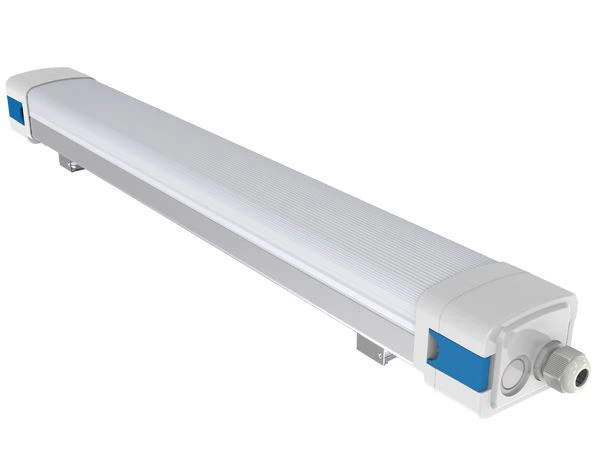
For areas that are more prone to moisture or dust, such as swimming pools or weightlifting areas, the Eco Version D2.5 LED Triproof Light is a great choice. These lights are waterproof, dustproof, and shockproof, ensuring reliable performance in harsh environments.
Another option is the D5 LED Triproof Light. It offers similar protection features and is also energy - efficient, which can help you save on electricity costs in the long run.
Planning the Lighting Layout
Once you've chosen the right lighting fixtures, it's time to plan the layout. The goal is to achieve an even distribution of light across the entire playing area.
A common approach is to use a grid - based layout. Install the lighting fixtures in a regular pattern across the ceiling, ensuring that they are evenly spaced. This helps to minimize the differences in light intensity between different parts of the facility.
You also need to consider the angle at which the lights are installed. Aim the lights towards the center of the playing area to avoid creating shadows on the sides. If there are any obstacles in the facility, adjust the angle of the lights to ensure that they illuminate the areas around the obstacles.
Using Lighting Controls
Lighting controls are an essential part of ensuring uniform lighting. They allow you to adjust the light intensity and distribution according to the specific needs of the facility.
Dimmers are a popular choice. They enable you to increase or decrease the brightness of the lights, which is useful for different sports activities or for different times of the day. For example, you may want to have brighter lights during a professional game and dimmer lights during a practice session.
Motion sensors can also be installed. These sensors detect movement in the facility and automatically turn the lights on or off. This not only helps to save energy but also ensures that the lights are only on when needed.

Regular Maintenance and Monitoring
Finally, don't forget about regular maintenance and monitoring. Over time, the performance of the lighting fixtures may degrade due to factors such as dust accumulation, bulb failure, or electrical issues.
Schedule regular inspections of the lighting system to check for any problems. Clean the fixtures regularly to remove dust and dirt, which can reduce the light output. Replace any faulty bulbs or components immediately to maintain the uniform lighting.
You can also use light meters to monitor the light levels in the facility. This allows you to detect any changes in the light distribution and make adjustments as needed.
Conclusion
Ensuring uniform lighting in an indoor sports facility is a multi - step process that involves assessing the facility's needs, choosing the right lighting fixtures, planning the layout, using lighting controls, and regular maintenance. By following these tips, you can create a well - lit environment that enhances the performance of athletes and the viewing experience of spectators.
If you're in the process of setting up or upgrading an indoor sports facility and need help with lighting, don't hesitate to get in touch. As an Indoor Sport Lighting supplier, I'm here to provide you with the best lighting solutions for your specific needs. Let's work together to create a uniformly lit indoor sports facility that everyone will love.
References
- Lighting Handbook: Reference and Application, by the Illuminating Engineering Society of North America.
- LED Lighting for Sports Facilities: A Guide to Design and Installation, by various industry experts.