


In the dynamic landscape of the smart control system industry, product obsolescence is an inevitable challenge that every factory, including ours as a leading smart control system factory supplier, must adeptly manage. This blog delves into the strategies and processes we implement to handle product obsolescence effectively, ensuring minimal disruption to our customers and the market.
Understanding Product Obsolescence in the Smart Control System Industry
Product obsolescence can stem from various factors. Technological advancements are at the forefront, with new software algorithms, hardware components, and communication protocols emerging regularly. For instance, the shift from wired to wireless communication in smart control systems has rendered many older wired - based products obsolete. Also, changing customer requirements play a significant role. As industries like food processing and manufacturing evolve, their demands for more precise, efficient, and automated control systems change. Regulatory requirements can also force product obsolescence. New safety and environmental regulations may make certain materials or designs in smart control systems non - compliant, thus obsoleting the related products.
Early Detection and Monitoring
To stay ahead of product obsolescence, we have established a comprehensive early detection and monitoring system. Our R & D team continuously scans the technological horizon, attending industry conferences, collaborating with research institutions, and following emerging trends in semiconductor technology, software development, and IoT (Internet of Things). This allows us to anticipate technological shifts and their potential impact on our product portfolio.
We also maintain close relationships with our customers. By having regular communication channels, such as customer surveys and feedback meetings, we can understand their future needs and expectations. This helps us identify if our existing products are at risk of becoming obsolete due to changing customer requirements. In addition, our legal and compliance team keeps a vigilant eye on regulatory changes. They ensure that we are aware of any upcoming regulations that could affect our products, and can plan accordingly.
Inventory Management
One of the key aspects of dealing with product obsolescence is inventory management. When we predict that a product is likely to become obsolete, we first assess our current inventory levels. We use data analytics to analyze historical sales data, production lead times, and customer demand forecasts. This helps us determine the optimal quantity of the product to keep in stock until its full - phase - out.
If the product is still in demand during the transition period, we may implement a "last - time buy" strategy. This involves purchasing a sufficient quantity of components and materials to manufacture the product for a limited time. This way, we can fulfill our existing customer orders while avoiding over - production. For products with slow - moving or excess inventory, we explore alternative markets. For example, some older smart control system models may still have applications in emerging economies or in industries with less stringent technological requirements.
Product Transition and Migration Strategies
When a product is approaching obsolescence, we focus on smooth product transition and migration for our customers. We develop clear communication plans to inform our customers well in advance about the product's end - of - life status. We provide detailed information on the reasons for obsolescence, the timeline of support, and the available replacement options.
Our replacement products are designed to be as compatible as possible with the existing infrastructure. For example, if we are phasing out an older smart control system for industrial lighting, we ensure that the new system can integrate with the existing wiring and control interfaces. We offer migration services to our customers, which may include installation, configuration, and training. This helps our customers switch to the new products with minimal disruption to their operations.
Recycling and Disposal
Responsible recycling and disposal of obsolete products are integral to our environmental sustainability efforts. We have established partnerships with certified recycling facilities that specialize in electronic waste management. When products are returned from our customers, they are first disassembled to separate valuable components such as circuit boards, metal parts, and batteries.
The separated components are then recycled following strict environmental standards. For example, metals are extracted and re - used in new manufacturing processes, while plastics are recycled into new plastic products. By recycling and reusing materials, we not only reduce our environmental impact but also recover some of the costs associated with product obsolescence.
Case Studies: Popular Industrial Lighting Products
To illustrate our approach, let's look at some popular industrial lighting products we supply. The NSF Food Industry UFO High Bay is a product that was revolutionary in its time, providing high - quality lighting solutions for the food industry. However, as new lighting technologies emerged, such as more energy - efficient LEDs and advanced smart control features, the older models of NSF Food Industry UFO High Bay started to face obsolescence challenges.

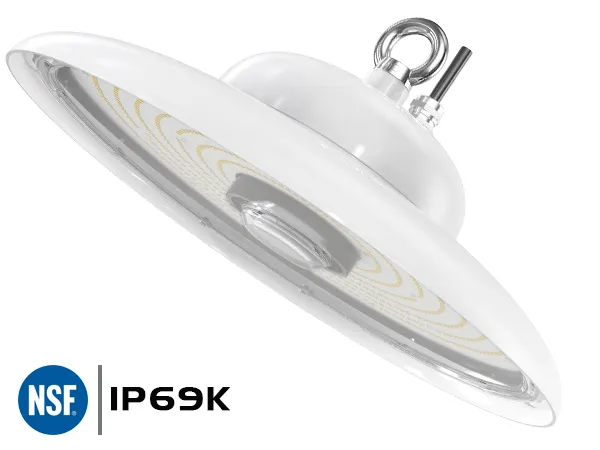
We used our early detection mechanisms to identify the potential obsolescence of these models. We informed our customers in advance and introduced the HB4 Pluggable Motion Sensor UFO High Bay as a replacement. The new model offers better energy efficiency, motion - sensing capabilities, and compatibility with modern smart control systems. We provided migration support to our customers, helping them upgrade their lighting systems without significant downtime.
Another example is the Eco Version D2 LED Triproof Light. As LED technology continued to evolve, and new environmental regulations were introduced, we identified the need to improve the product's design and performance. We developed a new version of the LED Triproof Light that not only meets the latest environmental standards but also offers enhanced durability and energy efficiency. We handled the obsolescence of the old version by gradually phasing it out, managing the inventory, and ensuring a smooth transition for our customers.
Conclusion
Handling product obsolescence in a smart control system factory is a multifaceted challenge that requires a strategic and proactive approach. By focusing on early detection, effective inventory management, smooth product transition, and responsible recycling, we can minimize the negative impacts of product obsolescence on our business and our customers.
We are committed to providing our customers with the latest and most advanced smart control system solutions. If you are interested in learning more about our product portfolio, or if you have any questions regarding product replacement or migration, we encourage you to contact us for a procurement discussion. Our team of experts is ready to assist you in finding the best solutions for your specific needs.
References
- Smith, J. (2021). Managing Technological Obsolescence in the Electronics Industry. Journal of Technology Management.
- Brown, A. (2020). Product Lifecycle Management in the Era of Rapid Technological Change. Harvard Business Review.
- Green, C. (2019). Sustainable Electronics Recycling: Best Practices and Case Studies. Environmental Science Journal.